

Description
The manual describes, supports and completes the indications provided in audio by the video.
It contains the characteristics of the main woods most suitable for carving, excavation methods, sharpening techniques and even a simple description of the wax finishing of the works.
It also contains various drawings, to be copied or useful as ideas for one's own imagination, for the creation of ornaments of different difficulties.
Then there are the indications for the geometric design with step-by-step descriptions for the design of the most used shapes in knife-point carving. You will learn to draw both a simple perpendicular without the use of the square, and to draw hexagons, dodecahedra, stars, etc.
The kit contains a hand-sharpened straight blade knife for maximum precision and ease of cutting. Today there are various shapes and sizes of carving knives, many of which are “specialized” in particular types of work or finishes. The contained straight-blade knife is one of the most versatile because it allows both Valle d'Aosta style triangles carving and decorative carving and use on walking sticks.
Swiss pine and lime are the best woods for carving with a knife, bas-relief or sculpture with palm gouges. Easily workable, compact, soft but not too much, they allow both deep and light excavations and details comparable to much harder woods.
Of light texture, the more uniform Linden with an always honest response to the blade and the more lively and knotty Swiss Pine, they lend themselves well to coloring even with colored wax alone.
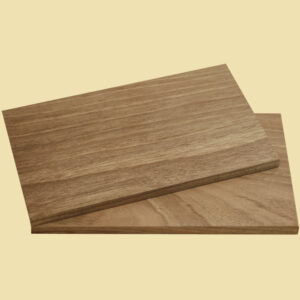
The Linden tablets contained in the kit are of excellent quality and allow both easy exercises and high precision and detail work with excellent results with any type of finish, liquid wax, paste wax, shellac, protective varnishes.
Video course preview